November 14, 2026
When thinking about orthodontic care, many individuals immediately envision aesthetic improvements. Straightening crowded teeth or closing visible gaps creates a symmetrical, confident smile that can transform self-image. However, orthodontic health involves much more than cosmetic appeal. The relationship between your upper and lower teeth, commonly referred to as your occlusion or bite, is fundamental to how you chew, speak, and preserve your dentition over time. A common question among individuals considering clear aligners is whether they simply reposition visible teeth or resolve fundamental occlusal imbalances.
Understanding orthodontic mechanics clarifies how modern clear aligner technology functions. Orthodontics does not focus solely on moving crowns of teeth into neat visual rows. It focuses on the complex biological remodeling of bone, periodontal ligaments, and dental arches to achieve total harmony between the jaws and teeth. Evaluating how Invisalign treatment can address occlusal complications helps individuals make well-informed decisions regarding their oral wellness and long-term dental function.
Understanding the Mechanics of Bite Function
A proper bite exists when the upper teeth fit slightly over the lower teeth, with the points of the upper molars resting comfortably in the grooves of the lower molars. This arrangement distributes bite forces evenly across the entire arch, preventing excessive pressure on individual teeth, the gums, and the temporomandibular joint. When teeth fail to meet correctly, dental providers refer to this condition as malocclusion.
Malocclusion can stem from genetics, jaw development patterns, childhood habits, or missing teeth. If left unaddressed, a misaligned bite can contribute to premature tooth wear, enamel fractures, difficulties with mastication, speech impediments, gum recession, and chronic jaw discomfort. Achieving an optimal bite is therefore an essential component of preventative dentistry and restorative oral health.
Exploring the Capabilities of Clear Aligners
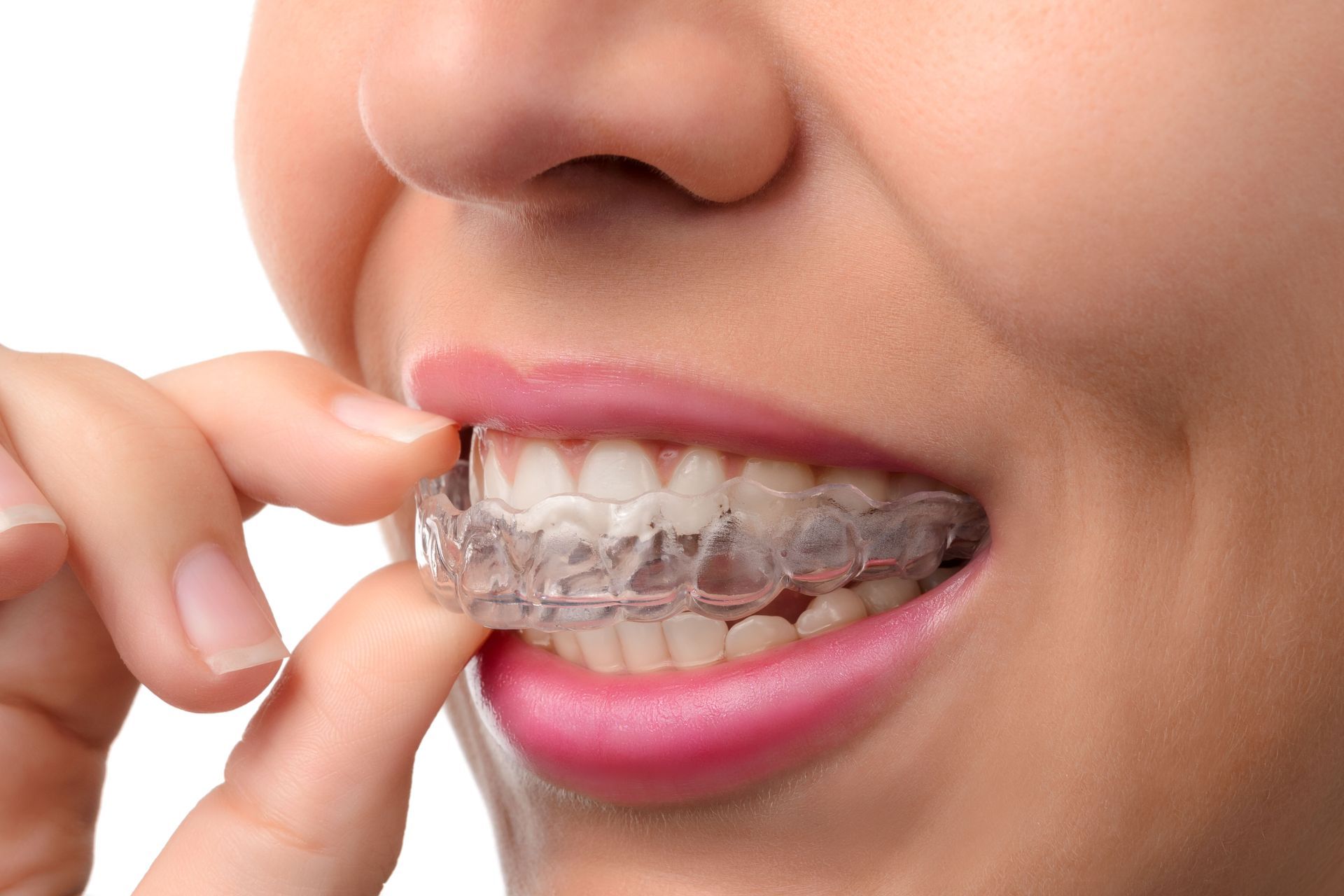
Clear aligners were originally developed to address mild spacing and crowding issues in the front teeth. In their earliest iterations, aligners focused heavily on cosmetic alignment. Over the past two decades, significant advancements in digital imaging, force application technology, and specialized materials have dramatically expanded their clinical scope.
Today, a comprehensive Invisalign treatment plan is capable of addressing complex occlusal discrepancies. Clear aligners exert gentle, controlled, continuous forces across the entire arch, shifting teeth in predetermined three-dimensional directions. Modern treatment protocols combine custom aligner trays with specialized tooth-colored attachments, precision cuts, and intermaxillary elastics to guide teeth into their ideal physiological positions. These engineering enhancements allow clinicians to alter not just the alignment of anterior teeth, but also the three-dimensional relationship of the entire dental bite.
Correcting Common Bite Imbalances
Clear aligners can treat several types of malocclusion effectively when managed under professional clinical supervision. Each type of bite irregularity presents unique mechanical challenges that modern aligner systems are designed to resolve.
Resolving an Overbite
An overbite occurs when the upper front teeth overlap the lower front teeth excessively in a vertical direction. In severe cases, the lower incisors may even contact the gum tissue behind the upper front teeth, leading to irritation and tissue damage. An appropriately sequenced Invisalign treatment corrects overbites through a combination of tooth intrusion and extrusion. By gently depressing the front teeth into the jawbone while allowing posterior teeth to erupt or level, aligners create balanced vertical clearance and restore healthy functional overlap.
Resolving an Underbite
An underbite happens when the lower teeth protrude past the upper front teeth, typically caused by undergrowth of the upper jaw, overgrowth of the lower jaw, or flared lower anterior teeth. An underbite can make chewing difficult and place uneven strain on the front teeth. When the discrepancy is dental rather than purely skeletal, an Invisalign treatment can correct the imbalance. Using tooth-colored composite attachments and elastic bands connected to the aligners, providers can retract the lower arch while advancing the upper teeth to achieve proper anterior guidance.
Resolving a Crossbite
A crossbite occurs when one or more upper teeth sit inside the lower teeth when biting together. This can occur in the front of the mouth or along the back molars. Crossbites often cause asymmetrical jaw movement, uneven tooth abrasion, and potential joint strain. Clear aligners treat crossbites by applying focused lateral forces that expand narrow dental arches or tilt individual misaligned teeth back into their proper position relative to opposing teeth.
Resolving an Open Bite
An open bite is characterized by upper and lower teeth that do not meet when the mouth is closed, leaving a distinct gap between the arches. This condition often results from prolonged pacifier use, tongue thrusting, or jaw growth discrepancies. An open bite complicates biting into food and can lead to speech lisps. Aligners are particularly well-suited for closing open bites because the plastic covering the chewing surfaces prevents unwanted posterior eruption while attachments guide anterior teeth toward each other.
Managing Daily Wear and Compliance
The clinical success of clear aligner therapy depends heavily on patient compliance. Because clear aligners are completely removable, achieving predictable tooth movement requires discipline and strict adherence to daily wear protocols.
According to Consumer Affairs, Invisalign aligners should be worn for 20 to 22 hours each day and can be removed when eating, brushing, and flossing. Following this timeline gives the periodontal tissues consistent mechanical stimulation, which is necessary for bone remodeling and proper arch movement. Removing aligners for extended periods delays treatment progression and can cause teeth to track unpredictably, compromising both cosmetic alignment and bite correction. Proper daily maintenance also involves regular brushing, flossing, and periodic routine checkups and cleanings to maintain optimal periodontal health throughout the entire orthodontic journey.
Comparing Clear Aligners and Traditional Brackets
When determining whether clear aligners or fixed braces are suitable for fixing a bite, several practical factors come into play. Both systems utilize biomechanical forces to guide tooth roots through bone, but their modes of application differ.
Evaluating Aesthetic and Functional Differences
Clear aligners offer distinct aesthetic and lifestyle benefits. Being virtually invisible, they allow adults and teens to undergo bite correction without noticeable metal components. Furthermore, the ability to remove aligners allows patients to eat without dietary restrictions and maintain meticulous oral hygiene, reducing plaque accumulation and minimizing the risk of enamel decalcification during treatment.
Evaluating Clinical Complexity
While clear aligners handle a broad spectrum of occlusal problems, severe skeletal discrepancies may occasionally require combined treatment approaches. If a bite issue stems from significant jaw size disharmony rather than tooth positioning, surgical orthodontics or fixed appliances might be needed alongside or prior to aligner therapy. A comprehensive digital scan and clinical evaluation by an experienced dental team will determine the precise feasibility of an Invisalign treatment for specific occlusal configurations.
Enhancing Health Through Proper Alignment
Straightening teeth provides visual enhancement, but correcting your bite delivers substantial health and functional advantages that protect your dentition for decades to come:
- Balanced Chewing Forces: Aligning your bite ensures that forces generated during chewing are distributed evenly, protecting individual teeth from fractures, micro-cracks, and premature enamel degradation.
- Periodontal Protection: Teeth that mesh correctly reduce trauma to supporting gums and alveolar bone, decreasing the risk of localized recession and periodontal inflammation.
- Clearer Speech: Restoring proper relationships between incisors improves phonetic articulation and tongue placement.
- Easier Maintenance: Teeth that sit in harmonious alignment eliminate awkward crevices, making daily brushing and flossing significantly more effective at removing harmful bacterial plaque.
- Long-Term Stability: A balanced occlusion supports lasting stability, helping teeth remain in position when combined with orthodontic retainers following active treatment.
Modern clear aligners are far more than a simple cosmetic solution for crooked front teeth. Advanced materials, specialized attachments, and digital planning allow a customized
Invisalign treatment to correct overbites, underbites, crossbites, and open bites with precision. By moving tooth crowns and roots into stable functional alignment, clear aligners improve both facial aesthetics and long-term oral health. If you are experiencing discomfort, uneven wear, or bite irregularities, schedule an appointment with Waterford Dental to discover how clear aligners can restore balance to your smile.